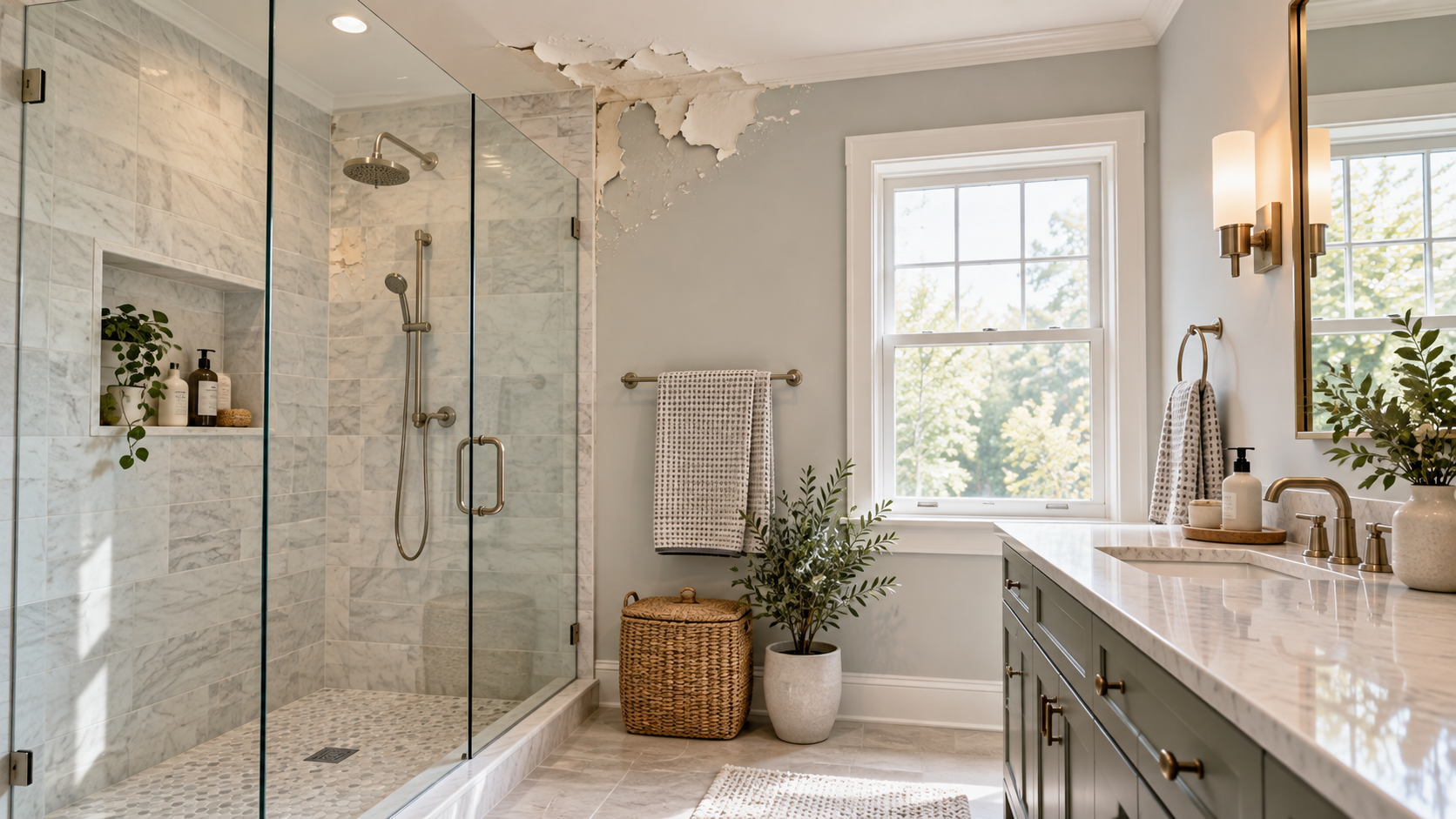
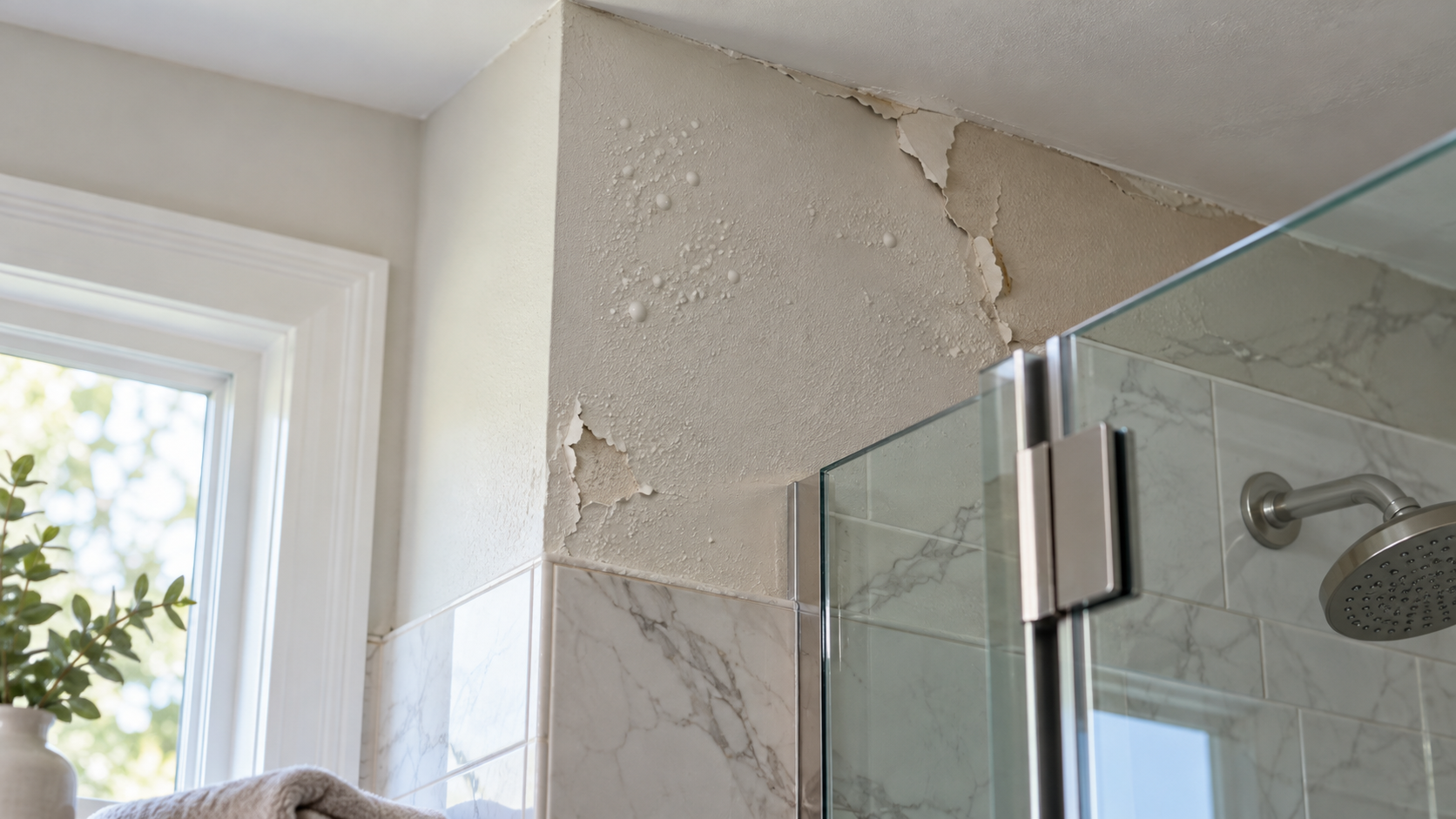
Bathroom paint peeling is a reason to check the surface and moisture conditions before choosing another can of paint. The next coat needs a sound, properly prepared base; it cannot correct a leak, failing material or a ventilation problem on its own.
For homeowners in Fairfield and Litchfield Counties, the useful first question is not simply “Which bathroom paint is best?” It is “What needs to change so this room is ready to be painted again?”
Start With the Pattern, Not the Paint Color
Notice where the failure appears: directly above the shower, around a window, at a repaired patch or across several surfaces.
Record when you first saw it and whether it changes after showering, rain or a plumbing problem. Photographs taken from a safe position can make that history easier to explain.
These observations help frame an inspection; they do not establish a diagnosis. A ceiling mark beneath another bathroom, for example, deserves a different investigation from paint lifting on a previously repaired wall.
Avoid treating every bathroom defect as proof that the old paint was the wrong sheen.
Benjamin Moore identifies moisture, unsuitable surface conditions and preparation problems among causes of paint blistering. Its guidance emphasizes addressing the underlying cause rather than covering the symptom.
Decide Whether the Room Is Ready for Painting
| What You Observe | What to Clarify First | What the Painting Plan Should Record |
| Repeated dampness after normal bathroom use | Whether ventilation and moisture control need evaluation | Any work that must be completed before coating |
| A stain associated with a leak | Whether the source has been repaired and affected materials assessed | The repair handoff, not just stain coverage |
| Paint lifting around an earlier patch | The condition and compatibility of the existing layers | Preparation and the finish expectation across the repair |
| A sound surface with an unwanted color | Which walls, ceiling and trim are included | A defined repainting scope and product selection |
If you suspect mold, use the Connecticut Department of Public Health’s mold guidance and arrange appropriate assessment.
Painting over a suspected problem is not a substitute for addressing it. This painting guide is not a mold-cleanup procedure.
For a ceiling affected by a known leak, see our guide to the repair-to-paint handoff for a water-stained ceiling.
Separate Correction, Preparation and Finish Work
A clear bathroom project has three separate questions.
Correction: Is there a leak, ventilation concern or damaged material that needs another professional before painting?
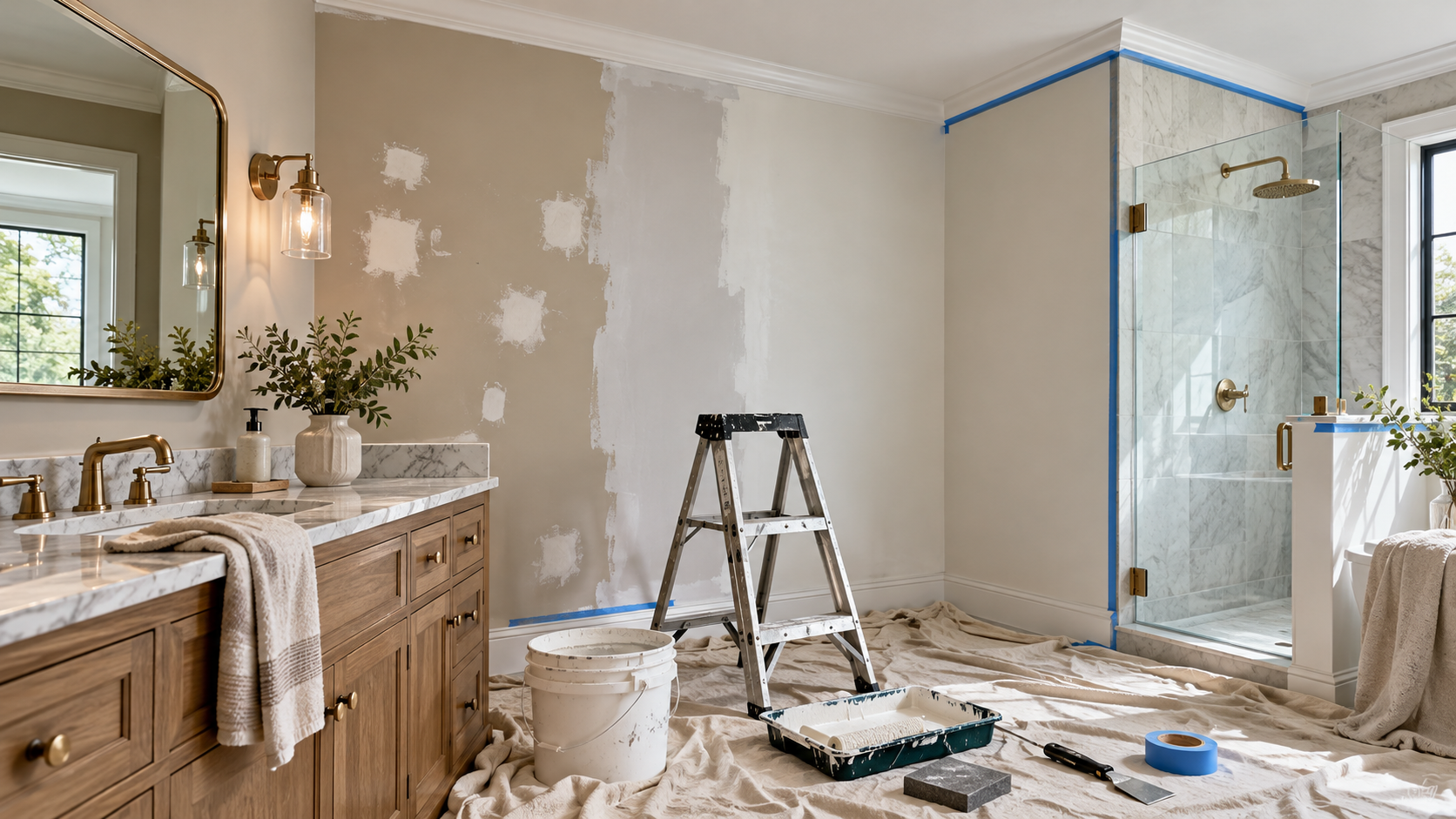
Preparation: Once the surface is suitable, what work is included to prepare the existing coating and any repaired areas?
Finish: Which product and finish are appropriate for each included surface, and how will the room return to use?
Putting all three under a vague line such as “repaint bathroom” makes it difficult to know what has actually been allowed for.
Ask who is responsible for each step and how the painter will know that any outside work is complete.
For older painted surfaces, discuss the age of the home before scraping or sanding. The EPA’s consumer guidance for pre-1978 renovation and painting explains why lead-safe planning matters.
Do not disturb loose coatings to find out what is underneath.
Plan Around the Bathroom You Actually Use
Identify whether this is the household’s only bathroom, a guest bath or a powder room without a shower.
Note which fixtures must remain accessible and when steam-producing use can stop. A painting date and permission to resume showering are different decisions.
Ask for product-specific instructions for moisture exposure and cleaning after the work.
A surface that feels dry may still need care while the coating develops its intended performance. Do not assume that every bathroom can return to its normal routine the following morning.
The distinction between paint dry time and cure time helps you ask for the right return-to-use instructions.
For a Wilton home or a property elsewhere in HomeCare’s Connecticut service area, send the room details before trying to reserve a fixed completion date.
That gives the conversation a practical starting point without requiring you to diagnose the coating yourself.
Questions to Include in the Estimate Conversation
- Are the ceiling, walls, trim and door all included, or only selected surfaces?
- Which existing defects are part of the preparation, and which need a separate repair?
- What happens if additional unsuitable material is identified during the work?
- Which product information will govern shower use, cleaning and other aftercare?
- How will the finished room be reviewed, including the appearance of repaired areas?
HomeCare’s interior painting service describes wall, ceiling and trim work.
The estimate should define the work appropriate to your bathroom rather than imply that every underlying building problem is included.
Bathroom Paint Peeling FAQs
Will a different sheen stop paint from peeling?
A sheen change alone does not establish or correct the cause. Surface condition, preparation, moisture and the selected coating system all need consideration. Choose the finish after clarifying readiness.
Can I simply paint over the loose edges?
Loose material needs professional review before coating. Covering it does not create a sound base. Do not scrape or sand an older coating without first addressing the relevant safety precautions.
Can bathroom painting and ventilation work be scheduled together?
They can be coordinated, but the responsibilities and sequence need to be explicit. Confirm which work must be finished before painting and who verifies that handoff.
Discuss the Room Before Choosing the Repaint Date
Tell HomeCare Painters where the peeling occurs, whether moisture or repairs are involved, and which surfaces you want refreshed.
Include your town and whether the bathroom must remain in daily use.
For service coverage, review HomeCare’s Fairfield County or Litchfield County pages.
What Happens Next
- Tell us where the paint is peeling
- Share any known moisture or repair history
- Identify the walls, ceiling, trim or door you want reviewed
- Explain how the bathroom needs to remain in use