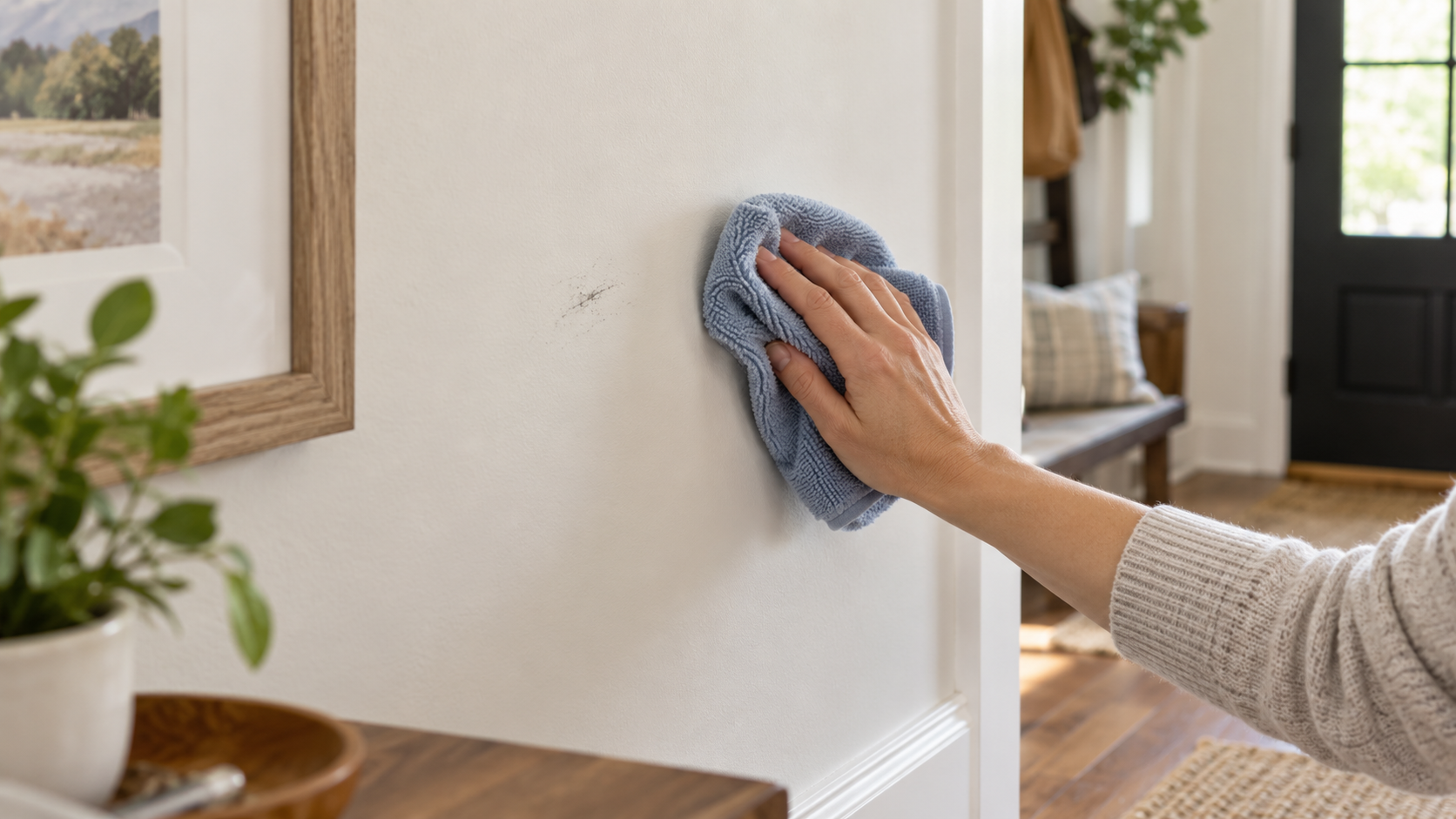
Cleaning painted walls should remove ordinary marks without turning one small spot into a larger change in sheen.
Start by identifying the finish, confirming that it is ready for cleaning and using its care instructions.
More pressure is not automatically a better solution.
In a busy Connecticut hallway, mudroom or family room, repeated marks may appear in the same places.
The useful decision is whether the surface needs gentle cleaning, a change in what touches it or a conversation about its condition—not an automatic whole-room repaint.
Is It Dirt, a Scuff or a Change in the Finish?
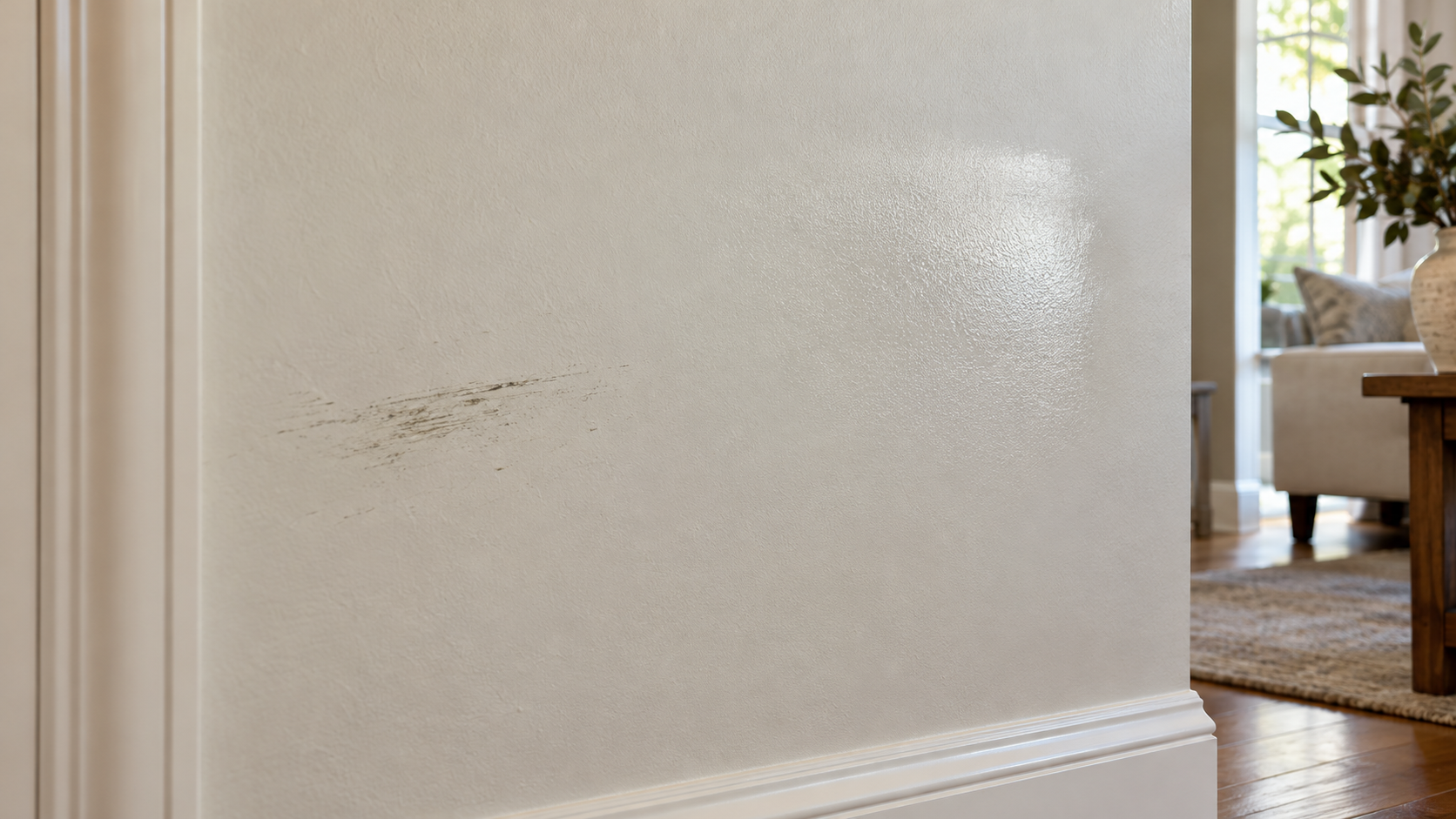
Look at the mark under normal room lighting before doing anything to it.
Note whether it appeared after a spill, furniture contact or a previous cleaning attempt.
If possible, identify the product and when the wall was painted.
A shiny patch can be different from dirt sitting on the surface.
Benjamin Moore describes burnishing as a change associated with rubbing or repeated cleaning.
Continuing to scrub an altered area may not restore its original appearance.
Photograph the area before trying another method.
That record can help explain whether the concern was present initially or appeared during cleaning.
A Practical Clean-or-Stop Comparison
| Situation | A Sensible Starting Point | When to Stop and Ask |
| Ordinary surface dirt on a known, cured coating | Follow the product’s mild cleaning guidance and test discreetly | The finish changes, transfers or becomes visibly uneven |
| An unknown finish or unknown painting date | Locate product information or ask the painter first | You cannot establish whether the intended method is suitable |
| A shiny area after repeated rubbing | Stop treating it as a stubborn dirt mark | More pressure is needed to chase the difference in sheen |
| A damp, bubbling or recurring stained area | Investigate the underlying condition instead of routine washing | Moisture, damaged material or suspected mold may be involved |
This comparison is about protecting the finish.
It is not a test for identifying mold, water damage or hazardous old coatings.
Start Gently on a Suitable Surface
For an intact coating that is ready for normal care, use the product’s instructions.
Benjamin Moore’s wall-cleaning guidance favors nonabrasive materials, a gentle approach and mild cleaning before stronger products.
Test a small, inconspicuous area first.
Avoid soaking the wall, and do not combine cleaning chemicals.
If a cleaner or abrasive tool changes the color, sheen or texture, stop rather than widening the test area.
Follow label precautions and protect nearby finishes.
New paint needs a separate check.
Do not assume it is ready for washing because the room has reopened or the surface feels dry.
Ask for the exact coating’s cleaning interval and early-spill instructions.
If you have just finished a repaint, first review the difference between paint dry time and cure time.
Find the Repeated Contact Point
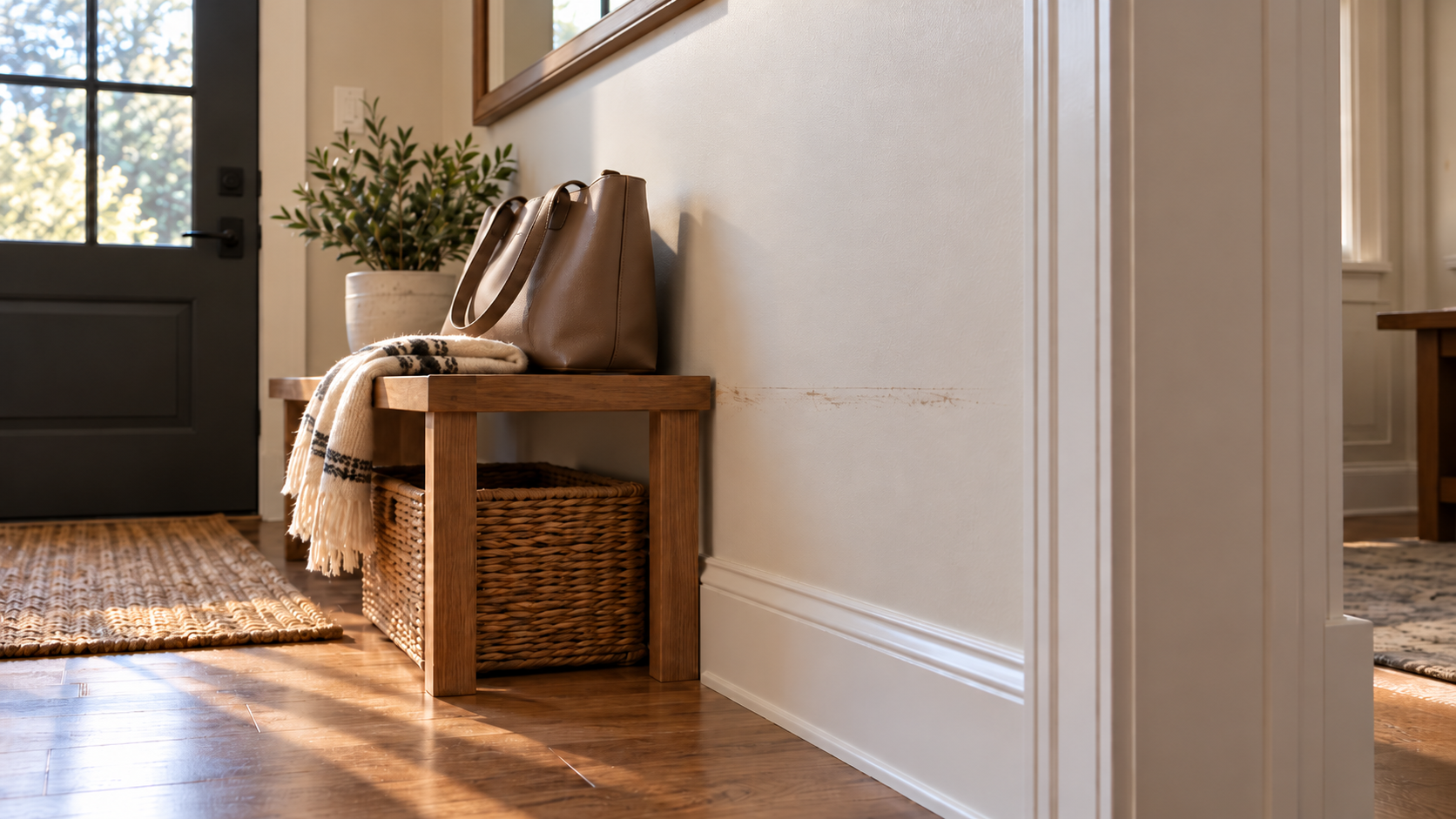
If marks keep appearing behind the same chair or beside the same entry, record what touches the wall.
A bag, furniture edge or everyday route may be part of the problem to discuss.
The purpose is to understand the pattern before selecting a stronger cleaner or requesting another coat.
For a Wilton hallway or a New Milford mudroom, the room’s actual use matters more than the town name.
Tell the painter how the surface is used, where contact occurs and which appearance you want to preserve.
A useful recommendation should address that specific wall rather than assume all high-traffic rooms need the same finish.
Avoid testing several different products across the visible area.
Keeping the original condition understandable is more helpful than creating a patchwork of cleaning attempts that is difficult to assess.
Keep a Wall-Care Record That Is Easy to Use
You do not need a complicated maintenance system.
Keep the following information together:
- Room and surface, such as “hallway wall beside garage entry.”
- Paint manufacturer, product, color and sheen, when known.
- Painting date and care instructions supplied at completion.
- What caused the mark, if known.
- The cleaning method tried and whether the surface changed.
If information is missing, leave it unknown.
A color name alone does not identify a product or its cleaning instructions.
Sharing what you do know helps the painter distinguish a finish-care question from a request for new painting.
Questions About Cleaning Interior Paint
Does washable paint mean I can use any household cleaner?
No. Use the coating manufacturer’s care guidance and the cleaner’s label. “Washable” does not establish compatibility with every solvent, abrasive pad or concentration.
Should I keep rubbing until a shiny patch disappears?
No. Stop and assess whether the finish itself has changed. A mark caused by rubbing needs a different conversation from ordinary removable dirt.
Does every mark mean the wall needs repainting?
No. First establish the condition and the appropriate care approach. If the finish is damaged, the next step is to discuss the affected area and realistic options, not assume a larger project immediately.
Can HomeCare help plan a finish for a busy room?
HomeCare’s interior painting service covers walls and other interior surfaces.
Describe the room’s use and cleaning needs during the estimate so the finish discussion reflects your household.
Talk About the Room’s Use Before Planning a Repaint
If cleaning is no longer addressing the condition, send HomeCare Painters a photograph, your town and a short explanation of how the wall is used.
Clarify whether you want advice on a future repaint or an estimate for several interior surfaces.
See Areas We Serve for Fairfield and Litchfield County coverage, and explore more HomeCare painting guides.
What Happens Next
- Identify the room and affected wall
- Share the paint product, color and sheen if known
- Explain what caused the mark and what cleaning has already been tried
- Tell us whether you are considering cleaning advice or repainting