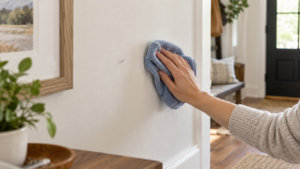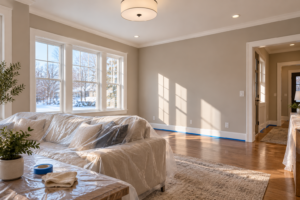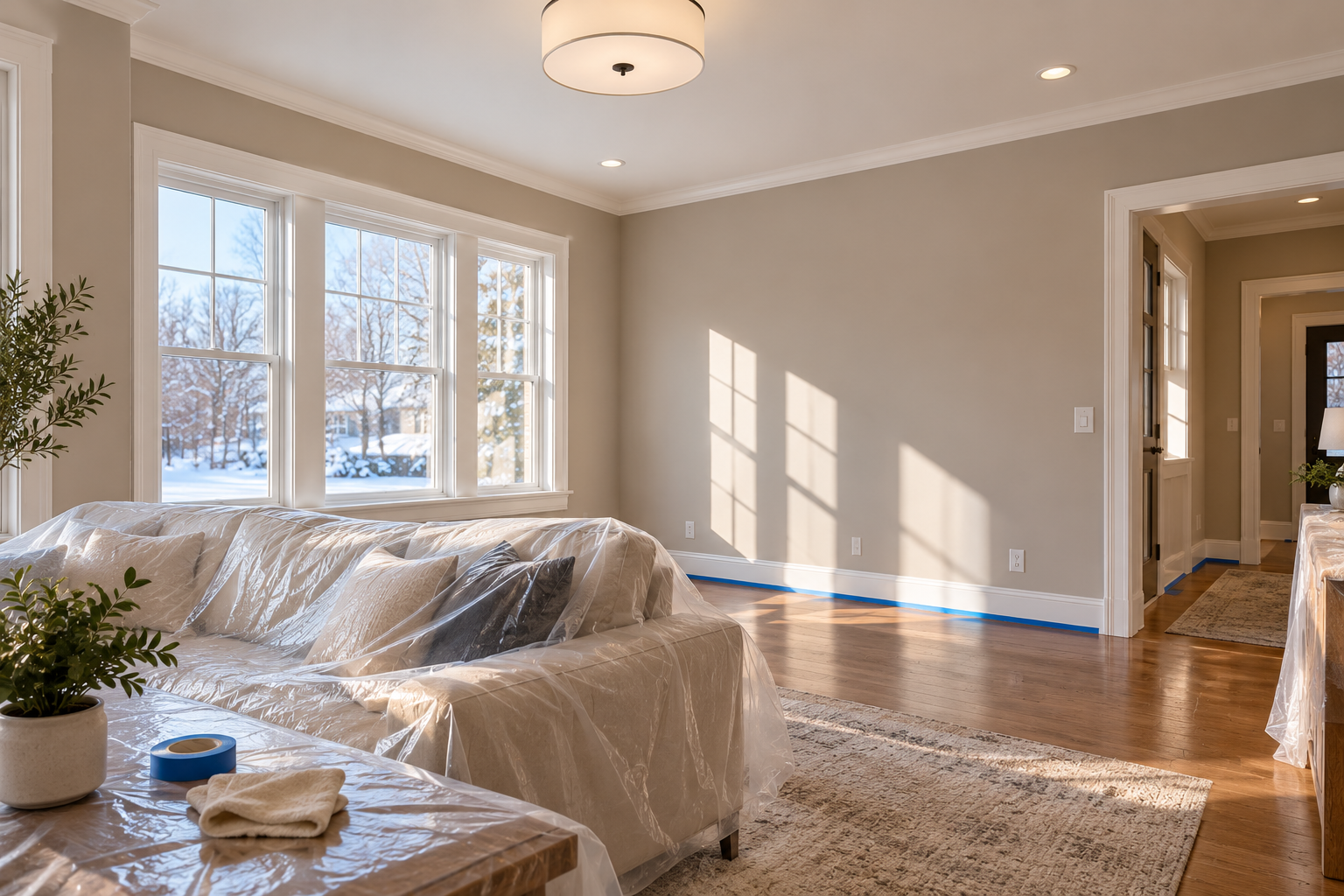
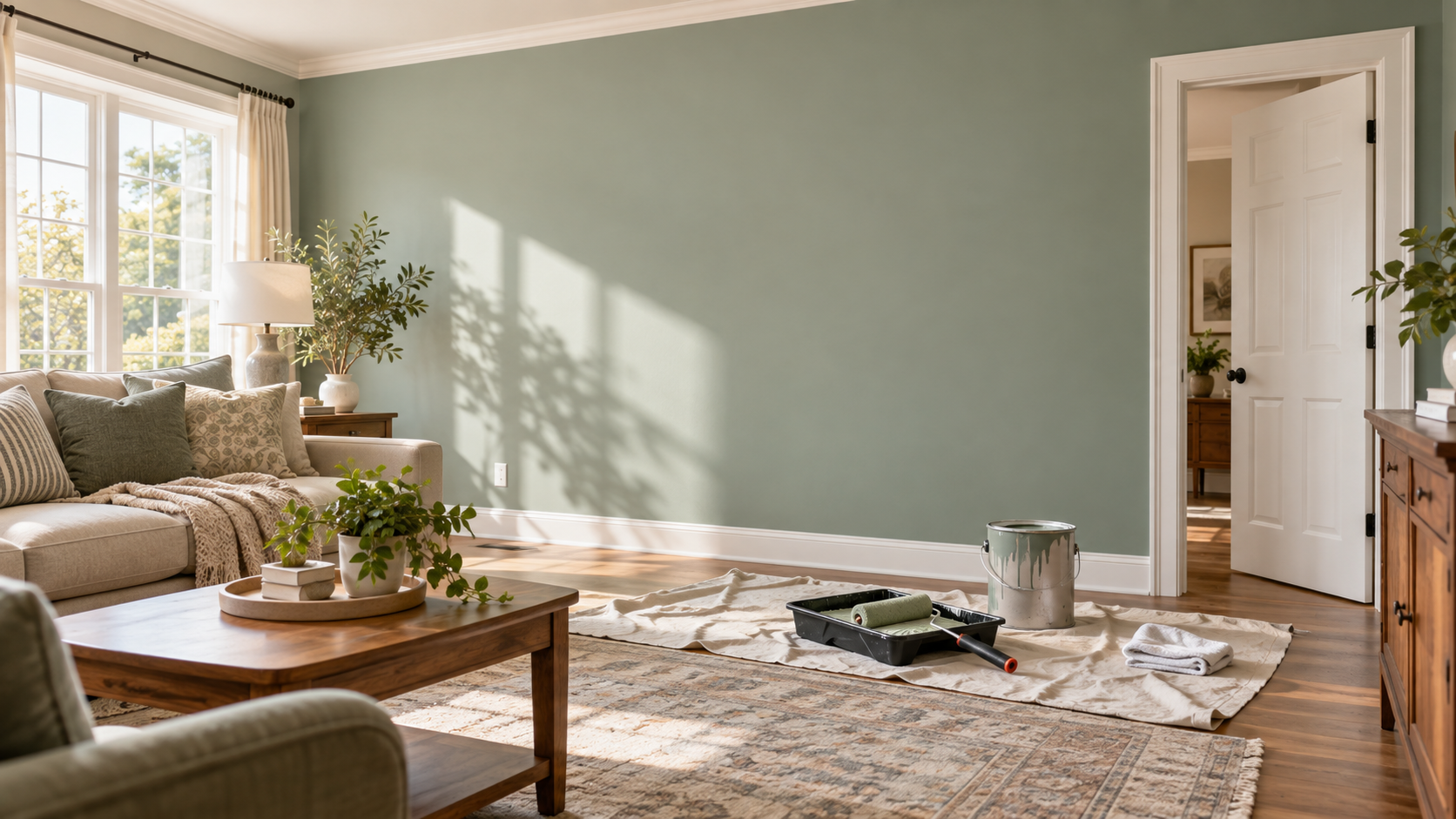
Paint dry time vs. cure time is the distinction to clarify before moving furniture back, closing freshly painted doors or washing a new finish.
A coating can feel dry before it has developed its intended hardness and resistance.
The correct timing comes from the actual product and conditions, not one rule for every room.
For a Fairfield or Litchfield County household, the practical goal is a return-to-use plan: what you can do, which surfaces still need protection and whom to ask if something happens sooner than expected.
Ask About the Action, Not Just Whether the Paint Is Dry
“Can we use the room?” contains several questions.
Walking through the space, placing furniture against a wall and cleaning a mark put different demands on a finish.
Ask about the activity you actually need to resume.
Benjamin Moore distinguishes dry paint from fully hardened, cured paint.
Its general care guidance is a useful starting point, but the instructions for your selected coating should govern the handoff.
Also separate coating readiness from ventilation and safe occupancy.
Touching a dry wall does not assess indoor air conditions or establish when every member of the household can return.
Share relevant concerns before the job and follow the product safety guidance and the project’s ventilation plan.
Four Milestones That Should Not Be Confused
| Milestone | What the Question Means | What to Ask the Painter |
| Dry to the touch | The surface no longer feels wet under the specified conditions | Is it still vulnerable to pressure, contact or marks? |
| Ready for another coat | The coating can receive the next application under its instructions | What product and conditions determine the interval? |
| Ready for a particular activity | A named action can resume without conflicting with the coating or safety instructions | Can this door close, this furniture return or this room be used as planned? |
| Cured and ready for routine care | The finish has reached the condition required for its intended use and cleaning | What cleaning guidance and remaining limitations apply? |
These milestones do not create four universal deadlines.
They help you ask for precise guidance instead of treating “finished painting” as permission for every activity.
Plan the First Days Around Contact Points

List the places where newly painted surfaces will touch something: a headboard against a wall, a chair back, a door against its jamb or objects returned to a painted shelf.
The painter can then discuss the relevant surfaces rather than give a single answer for the whole house.
If the kitchen is included, separate painted walls from cabinet doors, frames and shelves.
Cabinet painting can involve different handling and reassembly questions from an ordinary wall repaint.
Confirm which use instructions apply to which component.
Doors and windows deserve a specific conversation.
Benjamin Moore’s blocking guidance explains why freshly painted surfaces can stick together.
Ask how normal operation, security and safe exit routes will be maintained.
Do not force sticking surfaces apart as a cure-time test.
Why a Calendar Date Is Only Part of the Answer
A product’s instructions should be read together with the conditions required for application and curing.
Ask the painter which instructions apply in the actual room, particularly if it is cooler than the rest of the house or has limited ventilation.
Do not improvise with a space heater, a heat gun or a strongly directed fan to force a deadline.
Ask how the room conditions should be maintained and what adjustment is appropriate if the project’s timing changes.
For a Connecticut project scheduled during the heating season, discuss the room’s normal use and heating arrangement before work starts.
That is more useful than assuming an indoor project is unaffected by its surroundings.
No town-specific countdown can replace the selected product’s requirements.
Get a Small Care Record at the Walkthrough
A useful handoff identifies:
- The product, color and sheen used on each relevant surface.
- When the final coat was completed.
- The instructions for putting furniture and household items back.
- Any restrictions on closing, pressing against or covering painted components.
- When and how routine cleaning can begin.
- Who to contact if the finish becomes marked, sticky or unexpectedly damaged.
Keep this record with the project information.
A photograph of a paint can may help, but it is not a substitute for identifying which room or surface received that product.
Once the finish is ready for normal care, the guide to cleaning painted walls without shiny patches explains when to clean gently and when to stop.
Questions About Returning a Painted Room to Use
Is there one cure time for every interior paint?
No. Follow the specific product information and the professional guidance for the actual conditions. General articles can explain the difference between stages, but they cannot confirm the readiness of your coating.
Can I clean a spill before the recommended care period?
Ask for the selected product’s instructions for an early spill. Do not use routine scrubbing as a test of a new finish. Share what spilled and when the surface was painted so the response fits the situation.
Does an odor-free room mean the coating has cured?
No. Odor is not a cure test or a general safety assessment. Product instructions and the agreed ventilation and use plan remain the appropriate reference.
Include Aftercare in Your Painting Conversation
When requesting interior painting, tell HomeCare Painters which rooms and surfaces must return to use first.
Ask for a practical handoff as part of the painting process, not only a completion date.
What Happens Next
- Identify the rooms and surfaces that must return to use first
- Ask when furniture, doors and household items can safely make contact
- Keep the product, color and sheen information for each surface
- Confirm cleaning and aftercare instructions at the final walkthrough