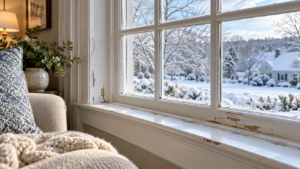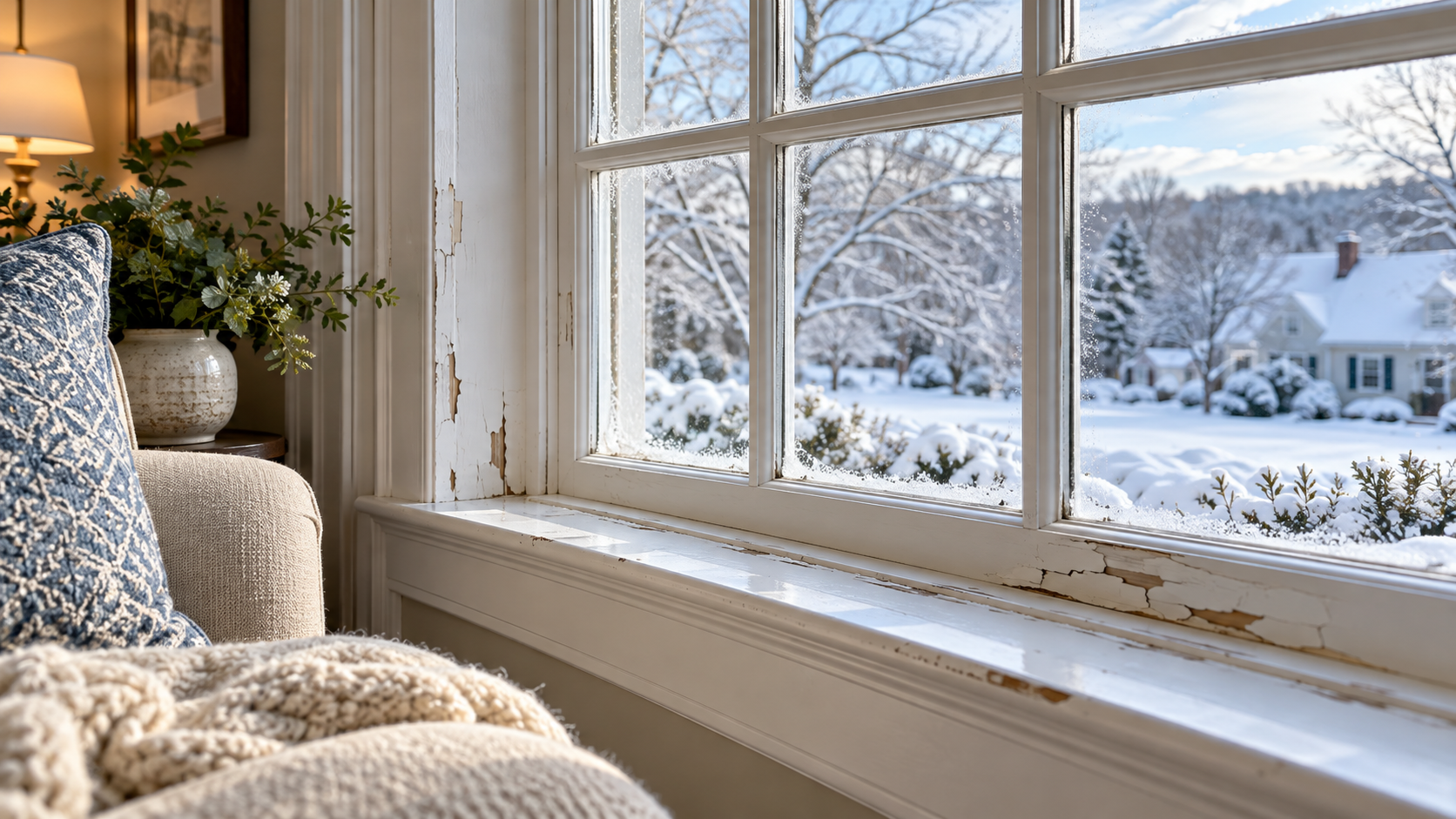
Window trim paint peeling in winter calls for a review of the window area before another coat is applied. Repeated condensation, a leak, the condition of the wood and the existing coating may lead to different next steps.
A photograph cannot determine which one is responsible.
This guide concerns painted interior trim around windows in Connecticut homes. It is not a recommendation to replace every affected window or a guide to repainting exterior siding.
Separate What You See From What You Suspect
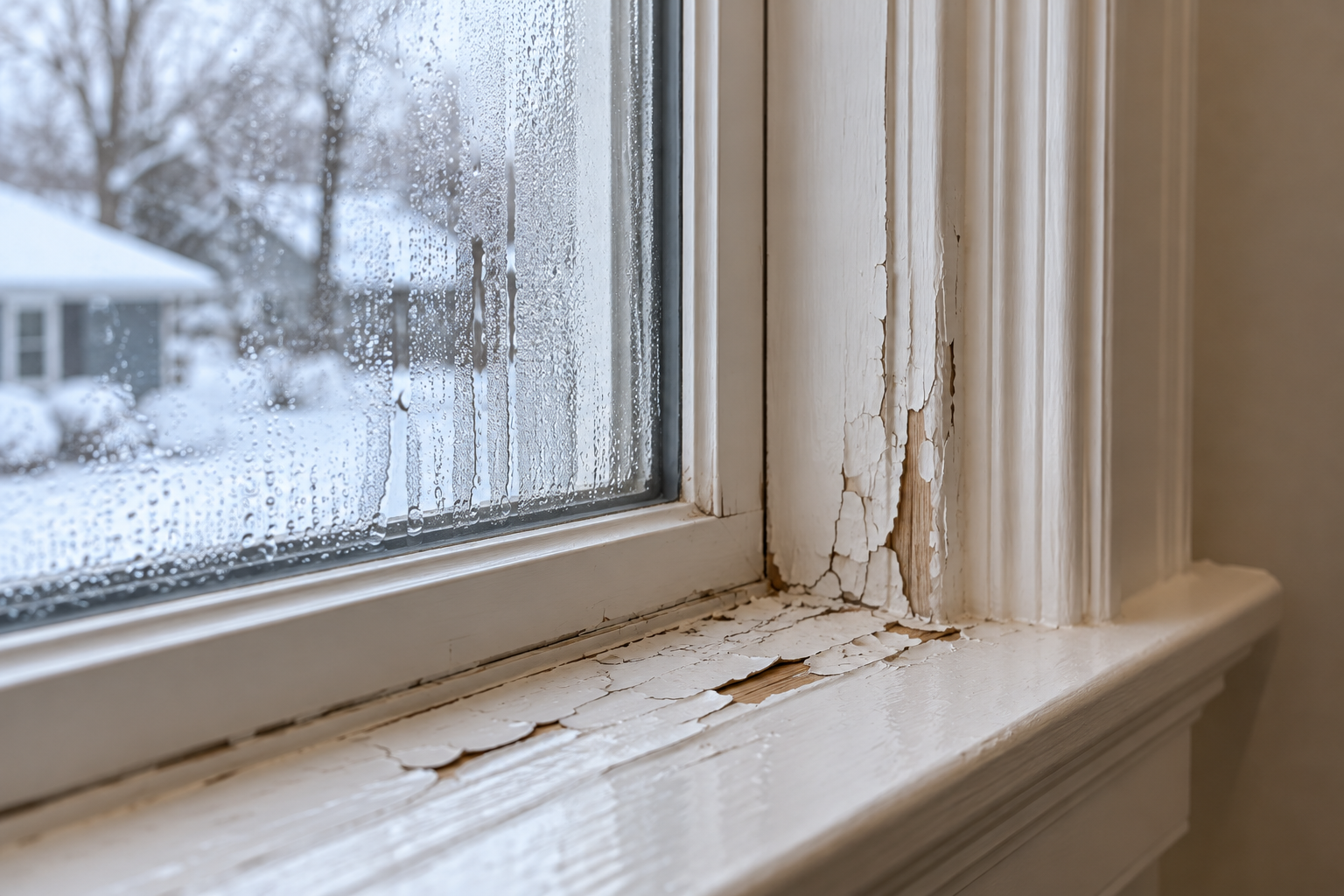
Record whether moisture appears on the room-facing glass, at the trim joint or after rain.
Note whether one window is affected or several, and whether the paint issue existed before the current winter. Those details help an appropriate professional investigate the cause.
The EPA identifies condensation on windows and other surfaces as a reason to address moisture.
A recurring wet area should not simply be treated as an appearance problem.
Connecticut’s winter home guidance discusses windows as part of cold-weather home care.
But a winter setting does not prove that every peeling sill has the same problem. Keep energy concerns, moisture assessment and paint preparation distinct.
Give Each Part of the Window a Clear Name
When discussing the work, identify the painted casing around the opening, the interior sill or stool, and the moving sash if it is included.
“Paint the window” can otherwise mean different things to the homeowner and the painter.
| Area or Observation | What to Clarify | What Not to Assume |
| Paint lifting on interior trim | Condition of the coating and material beneath it | That a new topcoat will correct repeated wetting |
| Moisture on room-facing glass | Whether indoor conditions or another issue need evaluation | That the painter supplies ventilation or window repairs |
| Soft, swollen or visibly damaged material | Whether repair or replacement is needed before finishing | That it is a minor cosmetic preparation item |
| A sash or door-like surface that sticks | Whether the problem is fit, coating buildup or a finish issue | That forcing it open is a safe way to diagnose it |
Do not probe damaged wood or disturb old paint to complete this checklist.
Observations from a safe position are enough for the initial conversation.
Address Old Coatings Before Disturbing the Surface
If the home was built before 1978, raise that fact before any sanding, scraping or window work.
EPA consumer guidance explains the lead-dust risks associated with disturbing older painted surfaces and recommends appropriate lead-safe professionals.
The age of the house does not identify every coating or prove what it contains. It does change the questions that should be resolved before preparation starts.
Keep children and pets away from loose chips and do not begin a DIY scrape test.
Where suspected mold or recurring dampness is involved, consult the Connecticut Department of Public Health’s resources.
Window-trim painting is not a substitute for moisture correction or remediation.
Coordinate the Repair and the Repaint
An efficient plan names the responsibilities in sequence: investigation if needed, repair if needed, confirmation that the material is suitable, and then the agreed preparation and finish work.
For a Wilton or Ridgefield home, begin with the affected room and window rather than a request to repaint every piece of trim.
If additional areas are part of your broader interior project, list them separately.
This keeps one unresolved window from becoming an unclear whole-room estimate.
HomeCare’s interior painting service includes trim, doors and frames within an agreed scope.
Share repair needs before scheduling; do not assume that window replacement, glazing, carpentry or ventilation work is included.
Ask How the Painted Window Will Return to Use
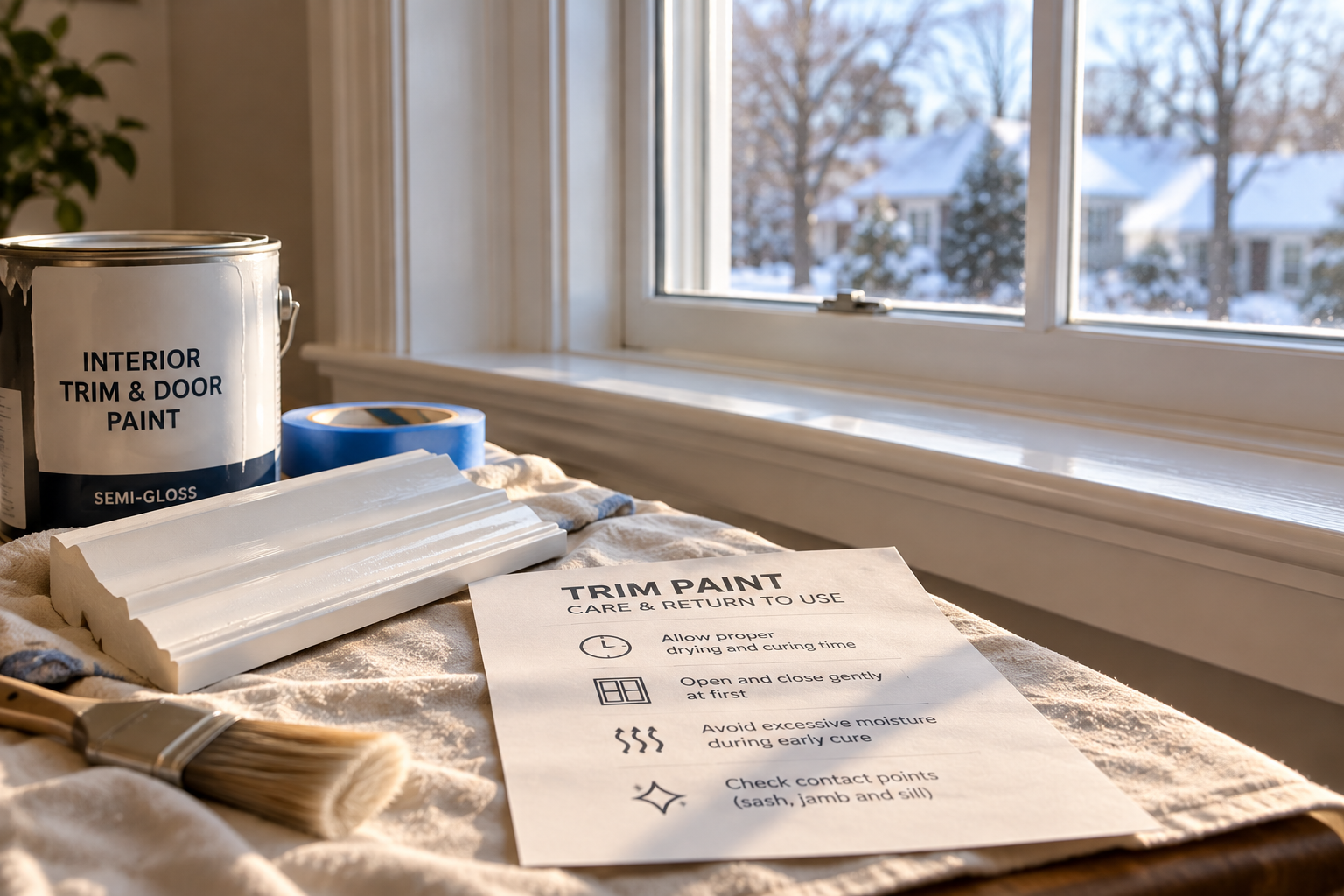
If moving painted components are included, ask which surfaces will receive paint and when they may touch or close.
Benjamin Moore describes paint blocking as uncured painted surfaces sticking together; fit and coating buildup can also matter.
Keep safe egress, security and required window operation intact.
The plan should not depend on leaving a necessary window unusable or on forcing a newly painted surface apart.
Ask for product-specific care instructions before the final walkthrough.
Read about paint drying versus curing for the questions to ask before painted components return to normal contact.
Window Trim Paint Peeling FAQs
Is peeling near a window always caused by condensation?
No. Location and season are clues, not a diagnosis. A leak, damaged material or coating issue may need a different response. Share the timing and observed pattern with the professional assessing the area.
Do I need to replace the window before repainting?
Not necessarily. The condition of the actual components determines whether repair, replacement or finish preparation is appropriate. A paint defect alone is not a replacement specification.
Can a better paint solve recurring moisture?
Coating selection should follow assessment of the underlying condition. It does not replace correction of a water or ventilation problem.
Request Trim Painting With the Condition Clearly Described
Send your town, the number of affected openings and photographs showing both the room and the trim.
Explain any known moisture history or completed repair work.
HomeCare’s regional information is available for Fairfield County and Litchfield County.
Confirm the project scope and availability for your property.
What Happens Next
- Tell us which windows or trim areas are affected
- Share when the peeling or moisture first appeared
- Explain any known repair or condensation history
- Identify any additional interior trim you want reviewed