
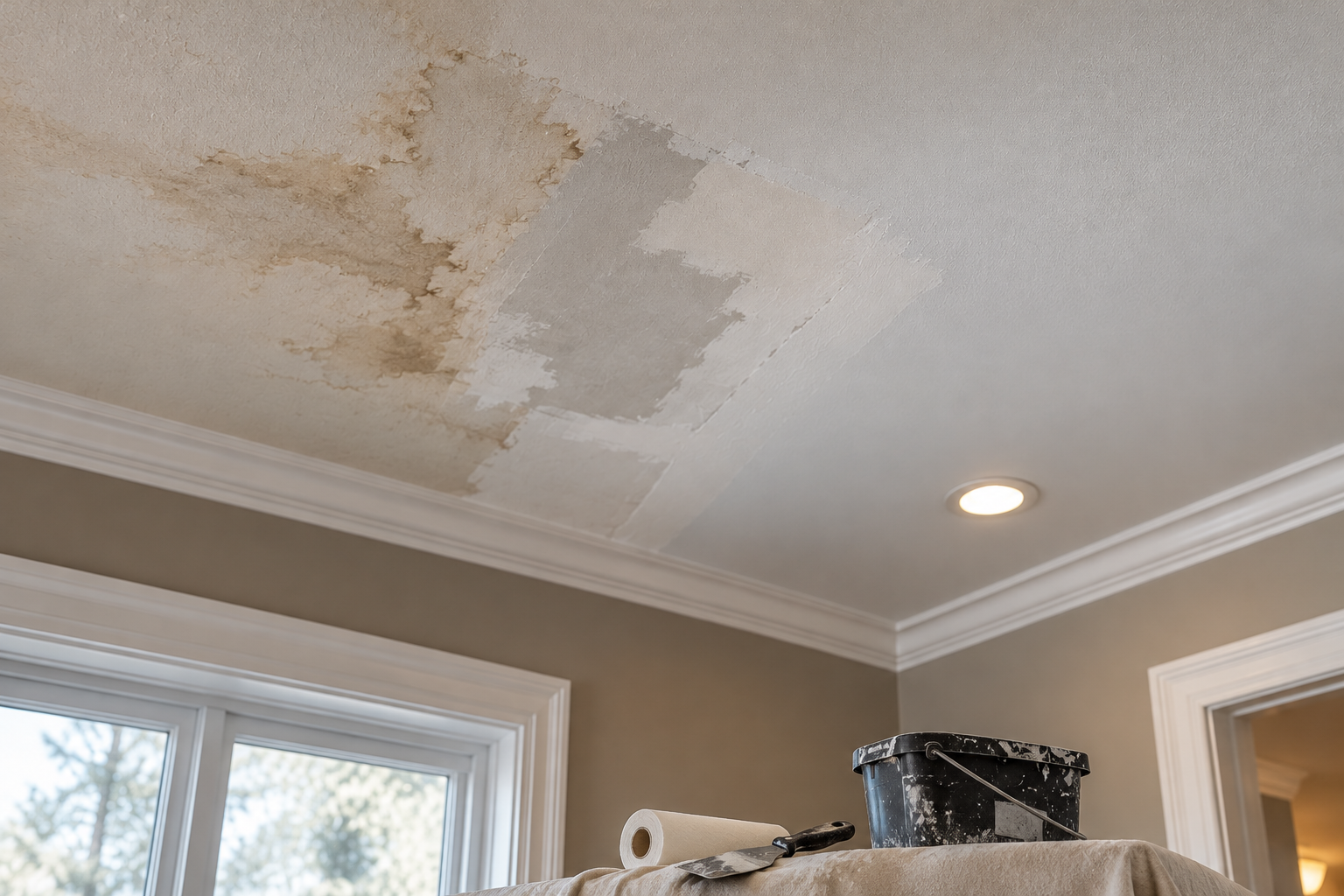
Repainting a water-stained ceiling starts after the water problem has been addressed and the affected materials are suitable for finishing. Hiding the mark is the last part of the decision, not proof that the ceiling is dry, sound or repaired.
If your Connecticut home has a ceiling stain, separate three jobs: finding the source, restoring the affected material and completing the paint finish.
Knowing who owns each job helps prevent a fresh-looking surface from concealing an unresolved problem.
First Distinguish an Old Mark From an Unresolved Event
An old discoloration and a recent leak can look similar in a photograph.
Share when the stain appeared, whether it has changed and what repair work has already been completed. Tell the painter if you do not know the history.
Do not stand beneath a sagging ceiling, press a bulge or open wet material to investigate it.
Active leaks, unstable material or water near electrical equipment need appropriate professional help before a painting visit. A painting estimate is not an emergency repair response.
Once the source is addressed, ask the responsible professional to clarify what was affected and what remains to be done.
“The plumbing was repaired” and “the ceiling is ready for paint” are not interchangeable statements.
The Four Handoffs Before a Finished Ceiling
| Stage | The Question to Resolve | Information Worth Keeping |
| Source | What caused the water to reach the ceiling? | Repair description and the responsible trade |
| Material condition | Is the affected area suitable to retain, or does it need repair or replacement? | Assessment of the actual ceiling, not only its photograph |
| Readiness | Who confirms that the material is ready for the selected finish work? | The repair and drying handoff |
| Coating and appearance | How will the stain and the surrounding finish be addressed? | Included preparation, primer where appropriate, and final paint boundary |
Sherwin-Williams’ guidance for water stains places repair of the water source and damaged material before stain-blocking treatment.
That sequence matters more than choosing a paint color early.
A Stain-Blocking Primer Is Not a Leak Repair

The purpose of a suitable stain-blocking product is different from the purpose of repairing the source.
It belongs in the coating specification after the underlying condition has been addressed.
The painter should select it for the actual substrate, stain and finish system rather than assume one product is appropriate for every ceiling.
Ask what the quoted preparation covers.
If another professional is repairing the ceiling, clarify who handles the transition from repair to paint-ready surface.
If a repair is not included in the painting estimate, it should not disappear inside a general promise to “make it look new.”
The EPA’s guidance on moisture in homes cautions against painting moldy surfaces and emphasizes fixing water problems.
Suspected growth or unresolved dampness needs its own assessment; it is not an extra coat of ceiling paint.
Define the Visible Finish Without Guessing the Repair
The repair area and the final painted area are separate parts of the scope.
Ask the painter to explain where the finish will stop and how it will be reviewed beside unchanged ceiling surfaces.
Bring any existing product and color information, but do not treat a matching label as a guarantee of an invisible result.
The conversation should include the ceiling’s current condition, existing texture, lighting and any previous repairs.
Agree on the expectation before the work begins.
Before moving back to normal use, clarify the selected coating’s drying, curing and care milestones.
For a home in Fairfield County or Litchfield County, the room itself is more useful to this decision than a county-wide average.
A continuous living-room ceiling, a small enclosed room and a detailed ceiling with trim need different scope discussions.
The address confirms service coverage; it does not diagnose the stain.
Send a Useful Brief Rather Than Only a Close-Up
Prepare a small set of information for the estimate:
- One photograph showing the room and the location of the stain, taken safely.
- A closer photograph without disturbing the surface.
- The date first noticed and whether the appearance has changed.
- A summary of completed plumbing, roof or other repair work, if known.
- The room’s use and any access restrictions.
- Whether your request includes only the ceiling or other interior painting.
Keep invoices and private information out of publicly shared photographs.
Send project records only through a channel agreed with the person handling the estimate.
Questions About Painting After a Ceiling Leak
How many days should I wait before repainting?
There is no reliable universal waiting period based only on a stain’s appearance. Material condition, drying and repair readiness must be assessed for the actual situation. A calendar date alone is not a readiness test.
Does the stain disappearing mean the ceiling is repaired?
No. A change in appearance does not establish that the water source or affected material has been dealt with. Keep repair confirmation separate from the decorative result.
Is all ceiling repair included in interior painting?
Do not assume that. HomeCare’s interior painting page includes ceiling painting and review of minor preparation needs.
Larger repairs, drying, plumbing, roofing or remediation need clearly assigned scope.
Plan the Finishing Stage With a Clear Handoff
Tell HomeCare Painters what happened, what has been corrected and what you want the room to look like when the finishing work is complete.
If readiness is still unresolved, say so at the first contact.
Review HomeCare’s painting process for the estimate-to-walkthrough sequence, and use Areas We Serve to find the relevant Connecticut coverage page.
What Happens Next
- Tell us when the ceiling stain appeared
- Share any known leak or repair history
- Explain what work has already been completed
- Identify the ceiling and any additional surfaces you want reviewed